
7 Ways to Reduce Costs on Your Next Metal Fabrication Project (Without Sacrificing Quality)
In any manufacturing project, the ‘golden triangle’ of cost, quality, and speed is a constant balancing act. Every project manager and engineer wants the highest quality product, delivered on time, at the most competitive price. But how can you lower costs without taking shortcuts that compromise the integrity of your final part?
The answer isn’t about cutting corners. It’s about smart design, strategic planning, and effective collaboration with your fabrication partner.
At Sia Kurz our goal is to help you achieve the best possible outcome for your budget. Based on our years of experience, here are seven practical strategies you can implement to reduce costs on your next metal fabrication project.
1. Collaborate on Design for Manufacturability (DFM) Early
This is the single most effective way to save money. DFM is the process of intentionally designing a product to be as easy and efficient to manufacture as possible. The earlier you consult with your fabricator, the more impact you can have. A 15-minute conversation during the design phase can save hours of labor and material costs later on. We can spot potential challenges, suggest more efficient ways to achieve your design intent, and ensure the part is optimized for our equipment.
2. Optimize Your Material Selection
The raw material is a significant portion of any project’s cost. While the function of your part dictates the necessary material properties, there are still ways to optimize.
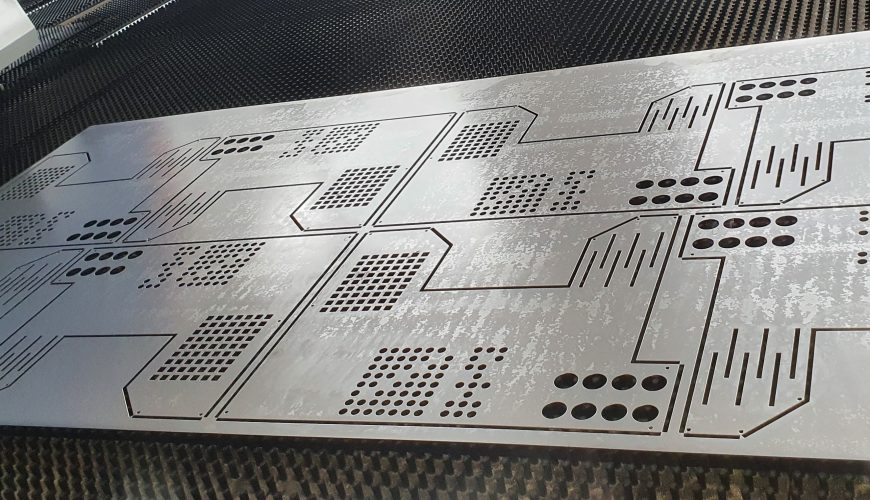
- Use Standard Stock Sizes: Designing parts that can be efficiently cut from standard sheet sizes (e.g., 2500×1250 mm or 3000×1500 mm) minimizes material waste and avoids the higher cost of ordering non-standard sizes.
- Don’t Over-Specify: Do you really need a highly specialized and expensive grade of stainless steel, or would a more common and cost-effective grade perform just as well for your application? We can advise on the best balance of performance and price.
3. Be Strategic with Tolerances
Unnecessarily tight tolerances are a major hidden cost. While critical for mating parts or high-precision assemblies, applying them across an entire drawing dramatically increases manufacturing time. Achieving a tolerance of ±0.1mm requires more careful machine setup, slower cutting speeds, and more intensive quality checks than a standard tolerance of ±0.5mm.
Actionable Tip: Clearly identify the critical features that require tight tolerances and allow for more standard, generous tolerances on non-critical features.
4. Minimize and Simplify Welding
Welding is a skilled, labor-intensive process. The more welding your project requires, the higher the cost.
- Design with Bends: Often, a single piece of sheet metal with several bends can replace an assembly of three or four separate parts that would otherwise need to be cut and welded together. A bent part is usually stronger, more dimensionally accurate, and significantly cheaper to produce.
- Ensure Easy Access: If welding is unavoidable, design the joints to be easily accessible for the welder and their tools. This speeds up the process and improves the quality of the weld.
5. Choose the Right Finish for the Job
Finishing processes like powder coating, galvanizing, or special polishing add cost and time. It’s essential to choose a finish that meets your requirements but doesn’t add unnecessary expense. Does the part need to be aesthetically perfect, or is its main purpose functional and hidden from view? For internal components, a simple raw finish or a basic primer might be all that’s needed.
6. Consolidate Your Orders and Increase Batch Sizes
There are fixed setup costs associated with every production run—loading the material, programming the CNC machine, and preparing the tooling. These costs are the same whether you’re making 5 parts or 500. By increasing your order quantity, you spread these setup costs over a larger number of units, significantly lowering the cost per part. If you know you’ll need more parts in the future, ordering them all at once is far more economical than placing multiple small orders.
7. Simplify Hardware and Assembly
Don’t forget the final assembly. The time it takes to manually insert and tighten nuts and bolts adds up. Consider using features like self-clinching fasteners (PEM nuts/studs), which can be pressed into the sheet metal during fabrication, or designing parts with tabs and slots that simplify and speed up alignment during assembly.
Your Partner in Efficient Manufacturing
Ultimately, reducing fabrication costs is a team effort. By viewing your fabricator as a resource and collaborating early, you can unlock significant savings without ever compromising the quality and integrity of your product.
Ready to discuss how we can make your next project more cost-effective? Send us your design for a complimentary review and quote. Let’s build better, together.


